
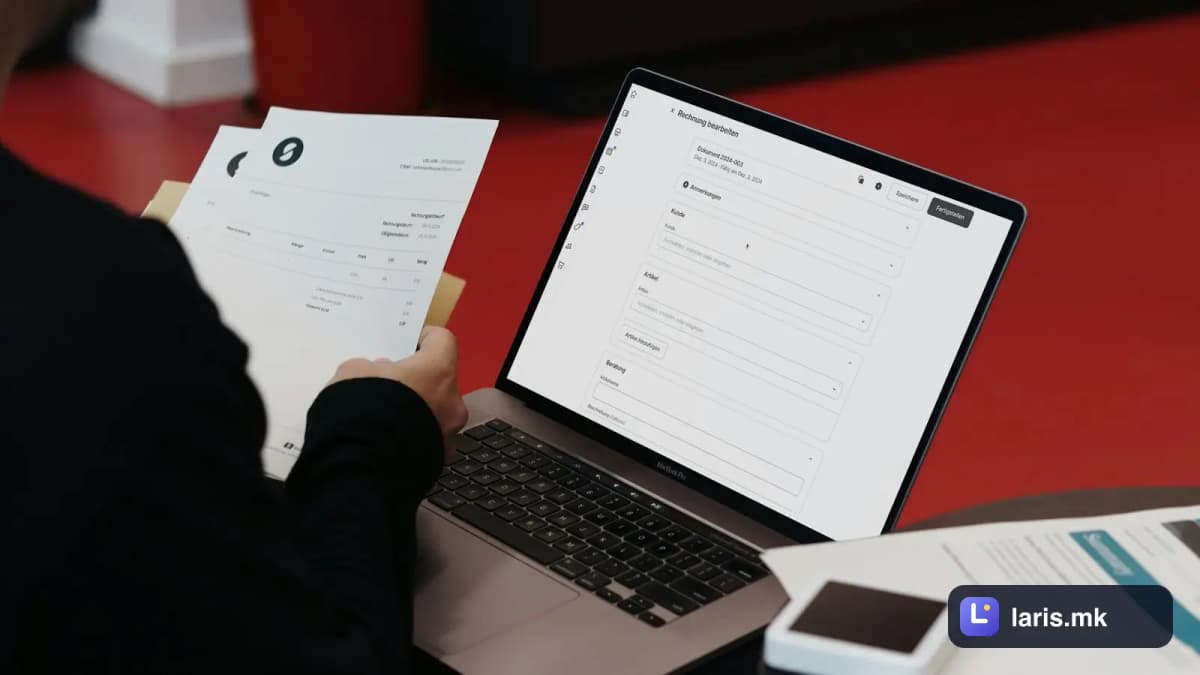
The electronic invoice (e-Invoice) is the biggest change to invoicing in North Macedonia in recent years. Instead of a PDF or paper, invoices between companies will be sent as a structured electronic document through the central system of the Public Revenue Office (UJP).
Important: the dates below are from the draft law on e-Invoice. They become final once the law is adopted and published in the Official Gazette. We will update this guide as soon as that happens.
When does e-Invoice become mandatory?
Under the draft law, the introduction comes in phases:
- 1 October 2026 — voluntary use
- 1 April 2027 — mandatory for all VAT payers
- 1 July 2027 — for companies that are not VAT payers
- 1 October 2027 — budget users and the public sector
- 1 January 2028 — everyone else
Earlier, 1 October 2026 was mentioned as the date of mandatory use — that was the previous plan and no longer applies under the draft law.
What actually changes?
- The invoice is not a PDF but a structured electronic document in a prescribed format.
- The invoice is sent and checked through the UJP platform, not directly by email.
- E-invoices are digitally signed.
- Incoming invoices from your suppliers also arrive electronically — no retyping from paper.
How to get ready
- Check whether your software supports e-Invoice. If you create invoices in Excel or Word, you will need a program.
- Clean up your partner data — correct tax numbers (EDB), names and addresses. An error in the data means a rejected e-invoice.
- Try it before the deadline. That is exactly what the voluntary phase is for.
- Agree with your accountant on who will receive and post the incoming e-invoices.
e-Invoice in Laris
e-Invoice is built into every Laris product — Laris Accounting, Laris POS and Laris ERP. You create the invoice as before, and the program sends it as an e-invoice. More on the e-Invoice page.
Updated: 21 October 2026